
In the competitive landscape of online crash games in 2026, Lucky Jet stands out as a high-velocity environment where strategic discipline outweighs mere intuition. Success on the 1win platform requires more than understanding the basic mechanics; it necessitates a comprehensive mathematical approach to risk and capital preservation. This guide analyzes proven strategic models, psychological control mechanisms, and technical tools designed to optimize the performance of players in India. By implementing these structured tactics, users can shift from sporadic betting to a systematic gaming methodology.

Fundamentals of Game Mechanics for Strategy Development
Before deploying advanced tactics, a player must comprehend the technical infrastructure that governs every round of Lucky Jet. The game operates under strict cryptographic and mathematical protocols that define the boundaries of potential success.
Understanding RNG and Provably Fair Technology
Every multiplier in Lucky Jet originates from a Random Number Generator (RNG) fortified by Provably Fair technology. This decentralized verification system combines a server seed with three independent client seeds to generate a unique SHA-256 hash before the round commences. This ensures that neither the operator nor external actors can manipulate the outcome. For a strategic player, this means that every “crash” is an independent event, and past results do not technically dictate future probabilities, although they do form observable statistical distributions.
Analyzing Volatility and Game Cycles
While each round is independent, Lucky Jet exhibits periods of specific volatility. Players categorize these into “cold” and “hot” cycles. A cold cycle typically features a high frequency of “blue” coefficients (below 1.2x), while hot cycles produce a higher density of “purple” (above 2x) and “gold” (above 100x) multipliers. Analyzing these cycles allows a player to adjust their stake size and risk appetite based on the current atmospheric density of the game room.
Classic Betting Management Strategies
Many professional players adapt traditional financial models to the crash game format. These systems focus on managing the size of the stake relative to previous outcomes.
The Martingale System: Risks and Opportunities
The Martingale strategy involves doubling the bet amount following every loss, with the goal of recovering all previous losses plus a small profit upon the next win. In Lucky Jet, players often target a fixed 2.0x multiplier for this method. While mathematically sound in theory, Martingale carries significant risks on the 1win platform due to potential “blue streaks” (long sequences of low multipliers) and maximum table limits. A player must possess a substantial bankroll to survive a series of ten or more consecutive losses.
Anti-Martingale (Reverse Strategy)
The Anti-Martingale approach advocates for increasing the stake following a win and decreasing it after a loss. This tactic focuses on exploiting “hot streaks.” By compounding profits during a winning sequence, the player maximizes gains while protecting the core bankroll during unfavorable cycles. This remains a popular choice for conservative Indian players who prioritize capital preservation over high-risk recovery.
The D’Alembert Strategy
The D’Alembert system offers a middle ground, utilizing a linear progression. The player increases the bet by a fixed unit after a loss and decreases it by the same unit after a win. This creates a lower risk profile compared to the exponential growth of Martingale. It suits players who prefer extended sessions and consistent, incremental growth of their INR balance.
Specialized Tactics for Lucky Jet
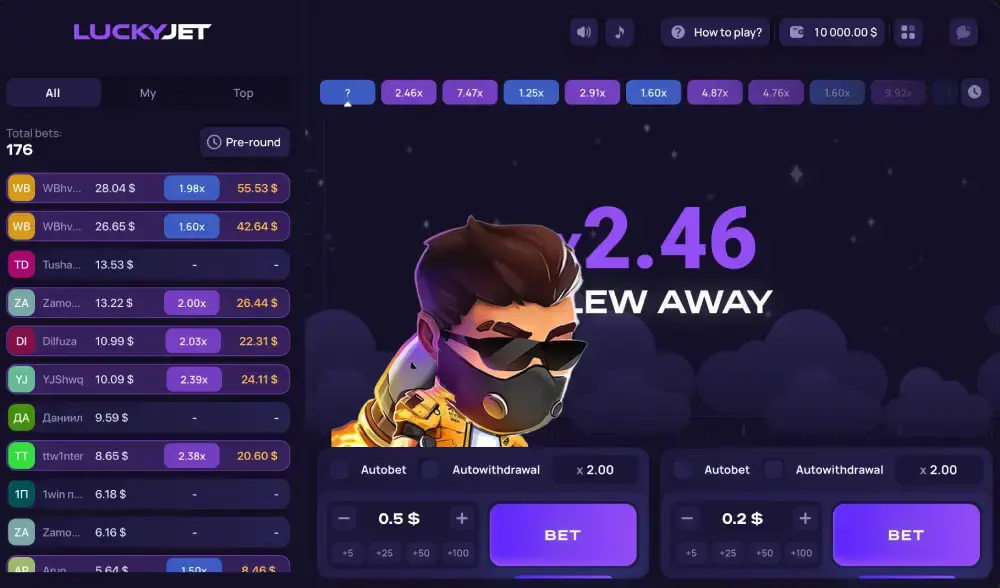
Beyond general betting systems, specific tactics leverage the unique dual-panel interface and speed of Lucky Jet.
Low Multiplier Strategy (1.2x – 1.5x)
The “slow and steady” approach targets frequent, small wins. By setting an auto-cashout at a range of 1.2x to 1.5x, players achieve a high win rate, as Lucky Joe reaches these levels in the majority of rounds. While the profit per round is low, the cumulative growth of the balance over hundreds of sessions can be substantial. The primary risk involves a sudden 1.0x crash, which requires several winning rounds to recover.
High Multiplier Hunting (x50 – x100)
This strategy requires patience and statistical observation. Historical data suggests that “gold” multipliers (100x+) occur approximately once every 60 to 90 minutes. Strategists monitor the history of rounds and begin placing small, consistent bets once 60 rounds have passed without a major spike. This is a high-reward, low-probability tactic that requires a dedicated portion of the bankroll specifically for “hunting” purposes.
The Double Insurance Tactic
This advanced method utilizes both betting panels simultaneously. The player places a large bet on the first panel with an auto-cashout set to a low multiplier (e.g., 1.50x). This first bet aims to cover the total cost of both stakes for that round. Simultaneously, the player places a smaller bet on the second panel, targeting a much higher multiplier (e.g., 5x or 10x). This ensures that even if the second bet fails, the first bet mitigates the financial impact, provided Lucky Joe reaches the initial threshold.
Leveraging 1win Automation Tools
The 1win platform provides technical features that remove the “human error” factor from the execution of a strategy.
Configuring the Auto-Bet Function
Auto-betting allows the player to enter every round automatically with a pre-defined stake. This is essential for strategies like D’Alembert or Flat Betting, where consistency is mandatory. It prevents the player from missing a winning round due to distraction or slow manual input.
Effective Use of Auto-Cashout
Auto-cashout is arguably the most important tool for a disciplined strategist. Setting a fixed exit point (e.g., 1.8x) ensures that the system secures the profit the instant Lucky Joe reaches that height. This eliminates the “greed factor,” where a player hesitates for a fraction of a second too long, resulting in a loss. Professional players in India use auto-cashout to strictly adhere to their mathematical models.
Bankroll Management: Preventing Rapid Depletion
A superior strategy fails without a rigid framework for capital management. Bankroll management ensures that a player survives the inevitable periods of volatility.
Establishing Stop-Loss and Take-Profit Limits
Every session must have a “ceiling” and a “floor.” A Take-Profit limit (e.g., 20% growth of the daily bankroll) dictates when a player should exit the game to secure gains. Conversely, a Stop-Loss limit (e.g., losing 10% of the total bankroll) prevents emotional betting and “chasing losses.” Discipline in exiting the game is what separates professional players from amateurs.
Flat Betting: Percentage of Bankroll
The Flat Betting model involves wagering a fixed percentage of the total balance (usually 1% to 3%) on every round. This approach prevents a single bad round from destroying the entire account. As the bankroll grows, the absolute value of the 1% stake increases, allowing for compound growth without increasing the relative risk level.
Analysis of Statistics and Pattern Recognition
The history bar at the top of the Lucky Jet screen is not merely decorative; it is a data source. Strategists analyze the color distribution (blue, purple, gold) to estimate the probability of the next outcome. While the RNG ensures randomness, the density of low multipliers often signals that a high multiplier is approaching, and vice versa. However, players should avoid the “Gambler’s Fallacy”—the belief that a win is “due” simply because of a losing streak.
Comparative Table of Strategies by Risk Level
| Strategy Name | Risk Level | Target Multiplier | Growth Speed |
| Low Multiplier | Low | 1.2x – 1.5x | Slow / Consistent |
| Double Insurance | Medium | 1.5x / 5.0x+ | Balanced |
| D’Alembert | Medium | 2.0x | Steady |
| Martingale | High | 2.0x | Fast / Dangerous |
| High Multiplier Hunt | Extreme | 100x+ | Exponential / Rare |
Player Psychology and Emotional Control
The greatest enemy of a Lucky Jet strategy is “tilt”—a state of emotional frustration leading to irrational decisions. When a player loses several rounds, the impulse to increase the stake to recover quickly often leads to total depletion of the bankroll. Maintaining a “cold” analytical mindset, following the pre-set limits, and taking regular breaks are as important as the betting system itself.
Frequently Asked Questions (FAQ)
What is the most successful strategy for Lucky Jet?
There is no single “best” strategy, as every method has a different risk-to-reward ratio. However, the Double Insurance tactic combined with strict Bankroll Management is widely considered the most balanced approach for long-term sustainability on 1win.
Can I predict the next multiplier using the history table?
The history table provides statistical context but does not offer a guarantee. While you can identify cycles of volatility, the Provably Fair algorithm ensures that each individual round remains unpredictable.
Is it possible to win consistently in Lucky Jet?
Consistency is achieved through discipline rather than luck. By following Stop-Loss and Take-Profit limits and utilizing Flat Betting, a player can maintain a stable balance over time, though losses are an inherent part of the gaming process.
How does the double bet strategy work?
You place two bets simultaneously. The first is a larger stake with a low auto-cashout (e.g., 1.5x) to cover the costs. The second is a smaller stake intended for a higher multiplier, providing profit potential without risking the core stake.
Should I use scripts or bots for betting?
We strongly advise against using third-party scripts or “predictor” bots. 1win uses advanced security systems to detect external software, which can lead to account suspension. Furthermore, most “predictors” are fraudulent and cannot bypass the SHA-256 encryption of the game.